GL data flows and key concepts
This section describes how data flows through the Axiom Financial Institution Suite.
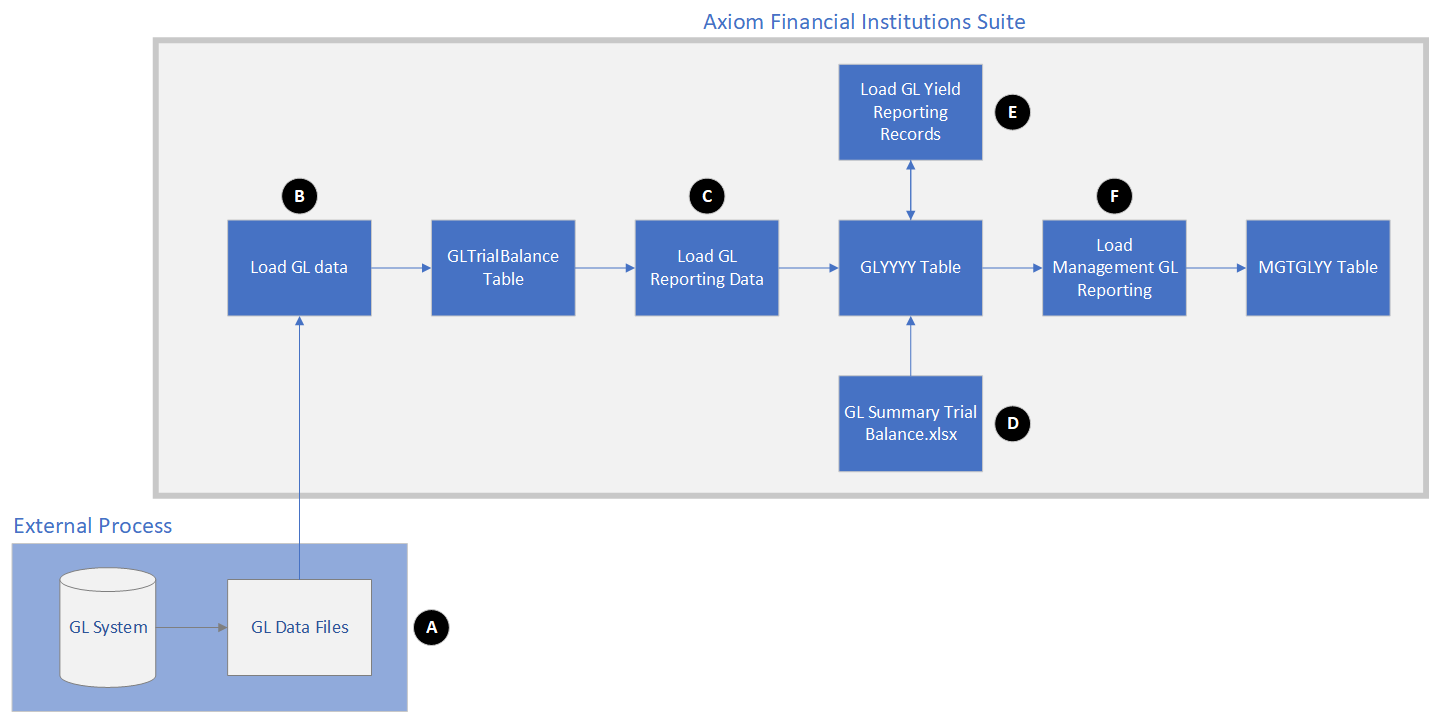
GL data flow schema

|
Your organization generates delimited trial balance data files according to GL data file specs provided in the Kaufman Hall scoping and design sessions. For more information, see GL summary data specifications and GL transaction data file specifications. |

|
The GL data is loaded into the system. |

|
The system pivots GLTrialBalance table data, applies reporting signs to balances, and replaces native GL data in the GL reporting tables signified by GLYYYY table. |

|
Optional: If your organization does not provide calculated retained earnings balance in your data files, the Axiom system will then calculate and save retained earnings to the GL reporting tables. |

|
Axiom creates yield reporting records and inserts them into the GL reporting tables. |

|
Optional: If your organization is licensed to use Organizational Profitability, a copy of GL reporting table data is placed into the management GL reporting tables. |
Reasons for the GL trial balance table
You will notice from the GL data flow schema that GL trial balance data is loaded into the GLTrialBalance table before it is loaded into the GL reporting tables. There are several reasons for this.
- The GLTrialBalance table serves as a intermediary for untransformed GL trial balance data, which in turn allows Axiom to evaluate if the GL data balances before reporting signs are applied to the data.
- In the event that GL trial balance inserts new accounts into the ACCT dimension with an incorrect report sign, you can correct the report sign and reload the GL reporting tables without the need to re-import the data.
- The GLTrialBalance table is configured to hold multiple fiscal periods and fiscal years. If data is unintentionally purged from a GL reporting table, you can quickly restore the data from the trial GLTrialBalance table instead of reloading GL trial balance data files.
- Allows the Axiom system to calculate the average and end of month retained earnings balances by summing the untransformed income statement account balances.
- If your organization provides the current fiscal period and previous fiscal period in one data file, placing the data into the GLTrialBalance table first makes it easier to load the previous fiscal year and current fiscal year GL reporting tables simultaneously. Your organization may also provide an updated file from the prior period to include post closing adjustments from backdated entries not available in the original file.
